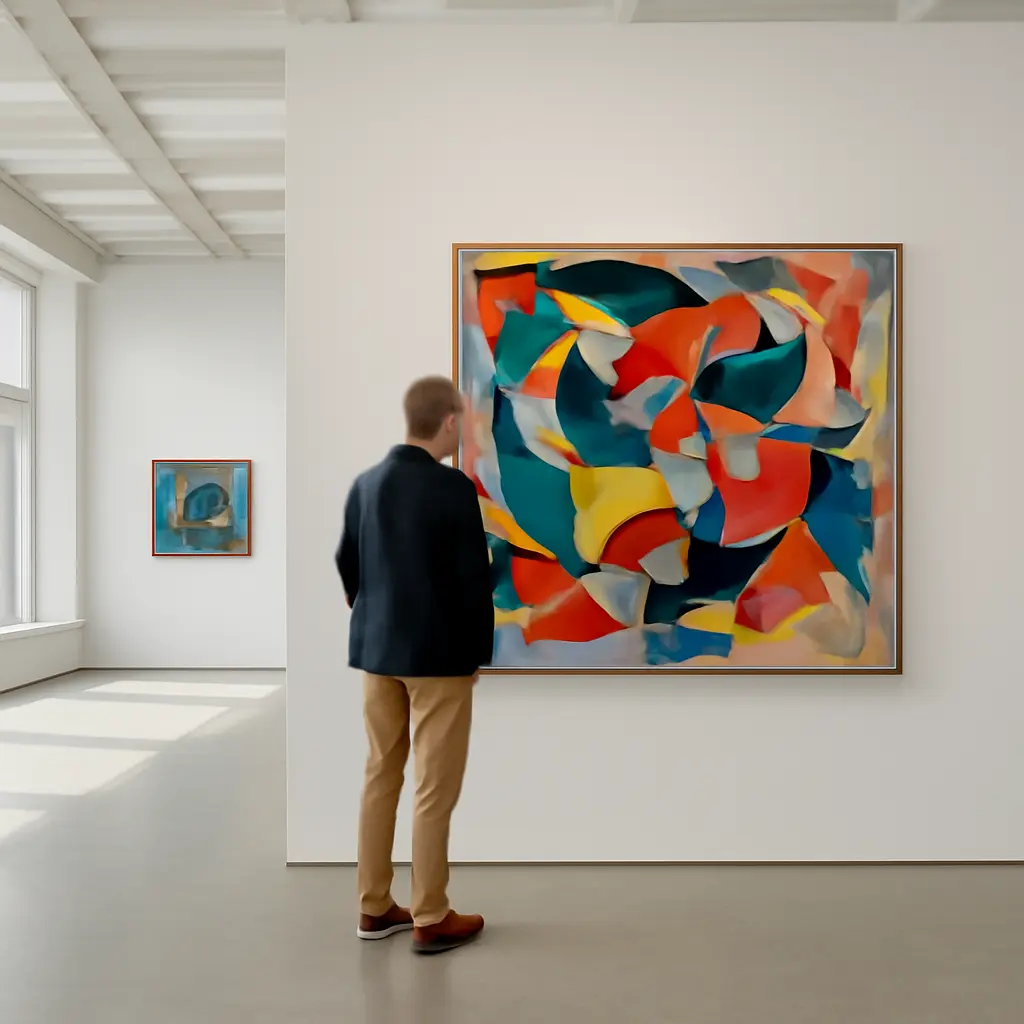
The emerging art market is the expanding ecosystem of artists, galleries, auction houses, online platforms, and collectors dealing in contemporary and other recently produced art. It is shifting faster than many buyers realize: digital discovery and sales have become routine, while auction results and collector demand can change sharply across regions and price tiers. Art Basel and UBS reported that global art sales fell 12% in 2024 to an estimated $57.5 billion, even as dealer sales rose 3% and online sales remained a meaningful channel. The change is not simply a move from galleries to websites; it involves new routes to market, uneven demand, evolving technology, and greater scrutiny of provenance, pricing, and risk.
The emerging art market’s structure is becoming more diverse
The “emerging art market” has no single official boundary. In this article, it refers to newer and fast-changing segments of the art economy, including online-first sales, young and mid-career artists, digital art, and markets gaining visibility beyond established Western centers. Art Basel and UBS’s 2025 Global Art Market Report estimates that the overall market contracted in 2024, but the decline was concentrated unevenly: auction sales fell while dealer sales increased. That divergence matters because buyers can no longer use one headline market figure as a reliable guide to every artist, medium, or price bracket.
The market’s main channels include primary-market galleries selling works for the first time, secondary-market auctions and resales, online platforms, art fairs, and direct artist-to-collector transactions. These channels overlap, but each has different pricing practices, fees, risks, and information available to buyers.
Primary and secondary markets
The primary market is the first commercial sale of an artwork, commonly handled by the artist or a representing gallery. The secondary market covers later resales, often through auction houses or dealers. The distinction is important: an auction result is a public transaction that may include a buyer’s premium, while a gallery price may be negotiated privately and include a different set of services. Art Basel and UBS reported that dealer sales reached an estimated $34.8 billion in 2024, up 3% year over year, while auction sales declined. This shows why overall market contraction does not mean every route to buying art is weakening.
Online and hybrid transactions
Online art sales allow buyers to discover, evaluate, and sometimes purchase works without visiting a gallery or auction room. Hybrid transactions combine digital browsing with in-person viewing, condition checks, or collection. In the 2025 Art Basel and UBS report, online sales were estimated at $10.5 billion in 2024, or about 18% of the global art market. That share is below the pandemic-era peak, but it confirms that online commerce remains an established part of the market rather than a temporary substitute for physical venues.
Digital listings can widen access, but images alone cannot fully establish scale, surface, condition, or authenticity. Buyers should request condition reports, dimensions, provenance records, return terms, and shipping details before committing. For high-value purchases, independent expertise can be more valuable than a platform’s convenience.
Emerging-market demand is shifting across regions and price tiers
Market geography describes where art is sold, who is buying it, and which cultural institutions shape attention. These patterns are not uniform: global totals can conceal different conditions in the United States, Europe, Asia, and newer collecting centers. The 2025 Art Basel and UBS report estimated that the United States remained the largest market in 2024, accounting for 43% of global sales by value, followed by the United Kingdom at 18% and China at 15%. These figures indicate concentration, even as new galleries, fairs, and collector networks broaden participation elsewhere.
Regional hubs and local ecosystems
A regional art hub is a cluster of galleries, museums, fairs, advisers, and collectors that helps artists gain visibility and supports transactions. Established centers such as New York, London, and Hong Kong continue to influence pricing and resale activity. At the same time, art events and institutions in cities across the Middle East, Africa, South Asia, and Latin America can connect local artists with international audiences. Such growth should not be mistaken for a uniform redistribution of market power: sales infrastructure, access to financing, and public auction data remain uneven.
Affordable and mid-market collecting
The affordable and mid-market segments generally involve works priced below the high-value trophy market, although definitions vary by report and seller. These segments can be more accessible to new buyers and less dependent on a small number of headline auctions. The Art Basel and UBS report found that auction sales below $50,000 represented the majority of lots sold in 2024, even though higher-priced works account for a disproportionate share of total auction value. For buyers, this is a reminder that market volume and market value tell different stories: many transactions can occur without driving the largest dollar totals.
A practical way to compare opportunities is to look at an artist’s exhibition history, gallery representation, institutional acquisitions, and repeat sales—not just one record price. A single auction result may reflect exceptional circumstances and does not guarantee that similar works can be resold at the same level.
Digital art is expanding, but technology does not remove market risk
Digital art is artwork created, distributed, or experienced through digital technologies. It includes screen-based works, software and generative art, and tokenized works associated with blockchain records. These categories differ substantially: owning a token linked to an artwork does not necessarily mean owning the copyright, the underlying file, or exclusive rights to display it. The market’s rapid growth and retrenchment in crypto-related collectibles demonstrated how quickly attention and prices can shift when speculation outpaces established collecting practices.
NFTs, tokens, and ownership rights
A non-fungible token, or NFT, is a unique blockchain-recorded token that can refer to a digital item or associated metadata. The token’s existence does not by itself verify the creator, establish copyright ownership, or guarantee that linked content will remain accessible. Buyers should read the sale terms carefully, confirm the artist’s identity and authorization, understand where the digital work is stored, and check what rights transfer with the purchase. The U.S. Copyright Office and U.S. Patent and Trademark Office have emphasized that intellectual-property questions involving NFTs depend on the specific work, transaction, and rights involved.
Generative and technology-assisted art
Generative art uses systems, rules, or algorithms to produce or shape an artwork; artificial intelligence may be one tool within that process. Its value depends on more than the novelty of the technology. Buyers may consider the artist’s authorship and creative decisions, whether the work is unique or part of an edition, how it is displayed, and whether software or hardware dependencies could affect long-term access. The U.S. Copyright Office’s guidance on works containing AI-generated material distinguishes human authorship from material generated automatically, making clear that legal protection can depend on the human contribution and facts of the case.
For digital works, preservation is part of collecting. Keep purchase documentation, edition information, relevant licenses, and instructions for display or migration. A work that depends on a particular platform or file format may require additional planning to remain viewable over time.
Price discovery and due diligence matter more in a volatile market
Price discovery is the process of assessing a work’s likely market value through comparable sales, demand, condition, rarity, and the seller’s terms. In art, there is no single transparent exchange price: many gallery transactions are private, auction results can be affected by fees and bidding conditions, and works by the same artist may differ significantly. The art market’s information gaps make disciplined research especially important when demand is changing quickly.
Provenance, authenticity, and condition
Provenance is the documented ownership history of an artwork. It helps establish an object’s identity and can reveal gaps, disputed ownership, or potential legal and ethical concerns. Authenticity concerns whether the work is genuinely by the attributed artist, while condition records describe physical changes, damage, or restoration. Buyers should request available invoices, catalogue references, certificates, condition reports, and records of prior ownership, and should seek independent advice when the stakes warrant it.
Comparable sales and total cost
A comparable sale is a transaction involving a sufficiently similar work by the same artist or within a relevant market segment. Comparisons should account for medium, size, date, edition, condition, provenance, and sale venue. The hammer price at auction is not the full cost: a buyer may also pay a buyer’s premium, taxes, shipping, insurance, and framing or installation costs. Galleries and online sellers may have their own payment, return, and delivery terms, so buyers should calculate the all-in cost before bidding or signing.
Liquidity and investment risk
Liquidity is the ability to sell an asset promptly without a substantial loss in value. Art is generally less liquid than publicly traded securities: finding a buyer can take time, resale may involve commissions, and market demand can be difficult to predict. A 2024 report by the U.S. Government Accountability Office noted that the high-value art market presents risks related to opacity and money laundering, and that U.S. rules and oversight differ across sectors. Collectors should therefore treat art primarily as a cultural purchase, avoid relying on guaranteed-appreciation claims, and consider professional legal, tax, and insurance advice.
How buyers can respond to a faster-moving market
The market’s speed creates opportunity, but it also rewards preparation. Before purchasing, buyers can define a budget, compare multiple channels, verify seller and artist information, and preserve written records. New collectors may benefit from visiting galleries and fairs, speaking with curators or independent advisers, and learning how prices differ between primary and secondary sales.
- Set an all-in budget that includes fees, taxes, delivery, insurance, and conservation.
- Research the artist’s exhibition and sales history without treating a record result as a reliable forecast.
- Request provenance, authenticity documentation, and a condition report where applicable.
- Read platform, gallery, or auction terms, including payment deadlines and return policies.
- For digital works, confirm what is being purchased, what rights transfer, and how the work can be preserved.
A useful accompanying graphic would compare 2024 global sales by channel—dealers, auctions, and online—with a note that online sales overlap with dealer and auction activity. A second chart could show the United States, United Kingdom, and China shares reported by Art Basel and UBS, helping readers distinguish market concentration from the wider growth of local art ecosystems.
Conclusion: The emerging art market rewards informed participation
The emerging art market is changing through diversified sales channels, uneven regional demand, digital formats, and greater attention to transparency and risk. The 2024 figures—$57.5 billion in estimated global sales, a 3% rise in dealer sales, and $10.5 billion in online sales—show why a single headline cannot describe every part of the market. Buyers should distinguish primary from secondary sales, evaluate digital ownership carefully, and treat provenance, condition, fees, and liquidity as central parts of due diligence. Before making a purchase, compare sources, ask specific questions, and seek qualified advice when needed; further reading from Art Basel and UBS, the U.S. Copyright Office, and the U.S. Government Accountability Office can help build a more grounded understanding.
Sources: Art Basel and UBS, The Art Basel and UBS Survey of Global Collecting 2025, https://www.artbasel.com/about/initiatives/the-art-market; Art Basel and UBS, The Art Market 2025, https://www.artbasel.com/about/initiatives/the-art-market; U.S. Copyright Office and U.S. Patent and Trademark Office, Non-Fungible Tokens and Intellectual Property: A Report to Congress, https://www.copyright.gov/policy/nft-study/; U.S. Copyright Office, Copyright and Artificial Intelligence, https://www.copyright.gov/ai/; U.S. Government Accountability Office, High-Value Art Market: Additional Federal Oversight Could Help Identify and Address Money Laundering Risks, https://www.gao.gov/products/gao-24-107168.